
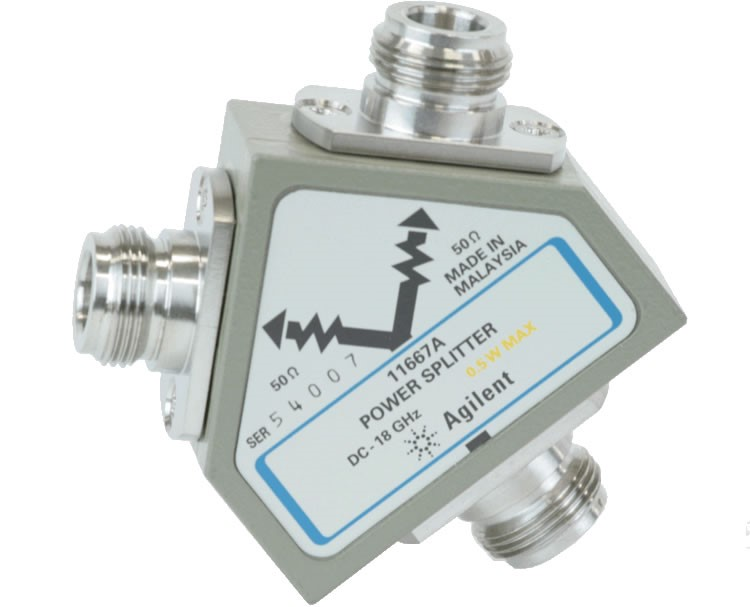
產品介紹
產品定位:Agilent 11667A Power Splitter 射頻功率分配器|RF Power Splitter 屬於向量網路分析與射頻微波元件量測設備,可用於S 參數、回波損耗、增益/損耗、濾波器、放大器、天線、線纜與 RF 模組驗證。
選型重點:實際量測範圍、精度與可用功能需依機身選配、附件與校正狀態確認。評估 11667A 時,建議同步確認頻率範圍、埠數、動態範圍、校正件、測試治具、Bias Tee、衰減器與選配功能。
採購與技術確認:弘燁科技可依目前庫存、附件組合、校正需求與交期,協助比對同級替代型號並整理可交付方案。
品牌與分類:品牌為 Keysight / Agilent / HP,產品分類為 射頻微波儀器。如需確認完整規格、附件、校正與交期,建議提供實際量測條件由 SMART 協助確認。
規格
主要規格與效能(Core Specifications)
產品定位(Product Overview)
・Keysight / Agilent 11667A 為高性能 RF Power Splitter(射頻功率分配器) ・推薦用於 Keysight Vector Network Analyzer 進行 Wideband Ratio Measurement(寬頻比例量測) ・Two-Resistor Type 設計,適用於 Source Leveling 與 Ratio Measurement 應用
・適合高頻 RF 與微波測試架構建置
・支援寬頻量測應用
・Equivalent Output SWR:1.33
・提升 Source Leveling 與比例量測準確度
・降低量測不確定度(Measurement Uncertainty)
損耗與追蹤特性(Loss & Tracking Performance)
・Insertion Loss:7 dB ・Tracking Between Any Two Ports:0.20 dB to 18 GHz
・優異雙輸出追蹤一致性
・適合寬頻比對量測與多通道測試架構
・Maximum Input Power:0.5 W
・適用於實驗室級 RF 與微波量測環境
典型應用(Typical Applications)
・AI 伺服器 / HPC 高速射頻模組量測架構
・6G 前期高頻研究應用
・LTE / NB-IoT / IoT 通訊模組驗證
・Vector Network Analyzer Ratio Measurement
・Source Leveling 與寬頻比較量測
原廠英文說明
The Keysight 11667A power splitter is recommended when making wideband ratio measurements using a Keysight Vector network analyzer. This two-resistor type power splitter provides excellent output SWR at the auxilliary arm when used for source leveling or ratio measurement applications. The tracking between output arms over a frequency range from dc to 18 GHz allows wideband measurements to be made with a minimum of uncertainty.